
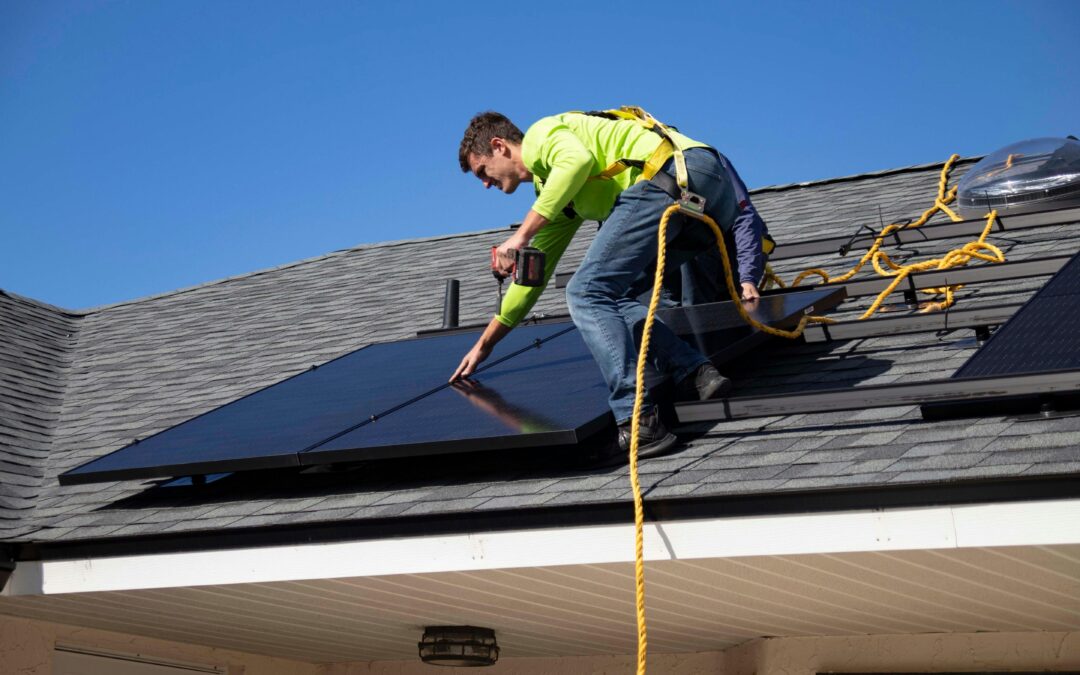
As residential solar adoption grows, so does the complexity of the agreements that make these projects possible. A typical solar installation can involve at least two separate contracts: one with the solar provider that designs and installs the system, and another with a third-party lender that finances it. Recent litigation from national companies known for their attacks on timeshare agreements highlights how misunderstandings about the dual relationship can lead to confusion, misplaced claims, and prolonged disputes.
If you are a solar installation company or their subcontractor, it is important to know how these arrangements are structured, why disputes sometimes arise, and what homeowners should understand before signing any documents.
Separate Agreements Serve Separate Roles
Photo by Daria Nepriakhina 🇺🇦 on Unsplash
In many residential solar projects, the installer and any subcontractors are distinct entities from the lender. The installer contracts with the homeowner to design, install, and activate a solar energy system. The lender contracts with the homeowner to finance the cost of that system. When disputes arise, confusion often occurs when claims against one party are improperly extended to the other, despite the lack of contractual privity.
Why This Matters for the Solar Installers
Installers have a strong interest in preventing disputes or misdirected claims that can delay resolution and increase costs for all parties involved. For solar providers, transparency is essential. Clear explanations at the point-of-sale help ensure customers understand the division between installation services and financing terms. One of the most important consumer protection principles is clarity of responsibility. From an installer’s standpoint, the service contract should explicitly state that the installer is not a lender, identify the financing entity as a separate contracting party, if applicable, and clarify that loan approval, payment terms, interest rates, and dispute resolution for financing are governed solely by the loan agreement. This separation aligns with federal Truth in Lending principles and helps avoid claims that the installer misrepresented credit terms or assumed lender duties. Best practice is to include a short, plain language disclosure explaining that financing approval and loan servicing are outside the installer’s control.
A service contract also needs to comply with not only the FTC Cooling Off Rule but also state law that may grant consumers time to cancel certain home solicitation sales. Texas provides the longest time frame of 5 days while Oklahoma, Colorado, and Kansas have 3 business days. Solar installations often fall within this rule when the contract is signed at the consumer’s residence. To align with this protection, an installer’s contract should include a written Notice of Right to Cancel citing to the specific state law, clearly state the cancellation deadline, explain how the cancellation notice must be delivered, and avoid the start of irreversible work until this recission period expires. Even when a financing agreement includes its own cancellation language, the installer should independently comply with federal and state Right to Cancel laws to avoid enforcement risk.
Compliance With State Consumer Protection Laws
Photo by Hoi An and Da Nang Photographer on Unsplash
Several states have passed their own Consumer Protection Acts in an effort to curb deceptive or unfair trade practices. The requirements vary among states and may include the required use of state-sponsored forms as well as licensing and disclosure obligations. In addition, many of the previous tax incentives available to consumers have shifted or expired. Misrepresenting the availability or value of federal or state tax credits can be a violation of consumer protection rules. It is important to have knowledge of these state specific requirements before doing business to prevent any unintended violations.
Oklahoma
The Oklahoma Consumer Protection Act identifies many categories of unlawful practices, including the Oklahoma Home Repair Fraud Act that prohibits misrepresentations of material facts such as the estimated energy saving or the condition of the roof to induce the execution of the contract and pricing that unreasonably exceeds the value of the services or materials provided. In addition, utilities in Oklahoma may charge a fixed fee when customers are grid-connected. Installers are expected to disclose these potential utility-imposed costs in the contract to avoid misleading consumers about “free” energy. Violating Oklahoma law can lead to significant penalties, including consumers recovering actual damages, attorney fees and costs, as well as potential triple damages for patterns of conduct. Violations also come with hefty civil penalties up to $10,000.00 per violation and possible criminal convictions.
Texas
The Deceptive Trade Practices Act in Texas declares false, misleading, or deceptive acts unlawful and is frequently used for consumer claims involving home improvement and service transactions involving misrepresented financial benefits, false affiliations, ignored no solicitation signs, and digital deceptions of “starting a quote” when the consumer is actually signing a binding contract. New provisions of the Residential Solar Retailer Regulatory Act will go into effect September 1, 2026 requiring new registration with the Texas Department of Licensing and Regulation as well as new disclosure requirements for all residential solar sales. Exposure under Texas law include actual damages, potential triple damages, attorney fees and court costs, and injunctive relief. Civil penalties can also be assessed of $20,000.00 or more depending on the specific violation for each deceptive act.
Kansas
The Kansas Consumer Protection Act prohibits deceptive acts and practices in connection with solar installation including deceptive marketing and failure to disclose financial terms. Kansas also requires installers to use the standard Residential Solar Energy Disclosure Statement as part of the agreement. In addition, statutes require certain generating capacity levels to ensure systems are appropriately sized for the home’s load as well as prohibitions on misrepresenting the annual or lifetime costs savings. Penalties for violations include actual damages, attorney fees and costs, and civil penalties ranging between $10,000.00 to $20,000.00 per violation depending on whether the consumer is elderly, disabled, or a veteran.
Colorado
The Colorado Consumer Protection Act requires mandatory disclosures and clear installation warranties, certain record retention, a welcome call with the consumer to confirm key contract details with the right of rescission for three days after the call as well as prohibition on false affiliations specific to solar installation. Violations of these laws are legally classified as deceptive trade practices and carry civil penalties of up to $20,000.00 and potential triple damages if the consumer brings a private action and proves the solar company acted in bad faith or with intent to deceive.
From a contract perspective, compliance with state consumer protection laws means avoiding ambiguity in the service contract that could be construed as misleading. Installers should ensure that the system size, equipment type, and expected performance are accurately described, production estimates are labeled as estimates rather than guarantees, utility savings are not promised unless contractually and factually supportable, and any tax credit or incentive references clearly state that eligibility depends on the customer’s personal tax situation. Overpromising energy savings is a frequent source of disputes and conservative language protects both consumers and installers.
Actions after the Sale
Many solar projects evolve after contract signing due to permitting issues, roof conditions, or utility requirements. Consumer protection concerns arise when changes feel unilateral or unexplained. Best practice is to require written change orders for material scope changes, obtain customer approval before cost increases, and clear explanation of delays caused by third parties such as utilities or inspectors. These steps align with many local home improvement standards and reduce claims of bait-and-switch conduct.
Consumer confusion often arises when warranties are implied rather than stated. Installers should clearly distinguish between manufacturer warranties on panels, inverters, and batteries versus installer workmanship warranties and ongoing maintenance obligations, if any. A well-aligned contract identifies warranty providers, duration, and claim procedures without overstating coverage.
Consumer protection is not only about what the contract says, but how it is delivered. Installers should provide their customers with complete copies of all signed documents, allow a reasonable amount of time to review before signing, avoid high-pressure sales tactics that undermine informed consent, and maintain records showing customer acknowledgement and receipt. While electronic signatures are valid, transparency in the signing process is essential.
Why Arbitration Clauses Appear in Solar Financing
Many consumers financing agreement include arbitration provisions. These clauses typically require disputes related to the loan agreement to be resolved through binding arbitration rather than in court. Arbitration clauses must be clearly labeled and evidence the voluntary consent to arbitration on behalf of the consumer. These provisions are a part of the lender’s risk management process. They are not drafted, enforced, or waived by the installer. In addition, the installer cannot compel or prevent arbitration under a contract it did not sign. Similarly, claims about loan servicing, credit reporting, or payment acceleration fall outside the installer’s scope of responsibility. Courts are often asked to disentangle these roles to ensure that each party is evaluated only under the agreements it actually entered into.
If the installer includes an arbitration or mediation clause in its service contract, consumer protection alignment requires clear and conspicuous placement and a plain-language explanation of the waiver of any rights. The service contract should also avoid clauses that conflict with or contradict the financing arbitration provisions. Most importantly, the installer’s dispute resolution clause should apply only to disputes arising from the installation contract, not the loan agreement as overbroad language risks being deemed unenforceable.
Summary
From a solar installer’s perspective, strong consumer-aligned contracts do more than reduce legal exposure. They build credibility in a market that depends heavily on trust. Most disputes arise not from bad intent, but from mismatched expectations. A contract that clearly explains roles, limits the scope to what can be delivered, and respects statutory consumer rights protects homeowners while allowing installers to operate efficiently and defensibly. The experienced team at Davis Business Law can review your current contract or draft a solar installation service agreement to ensure a smooth and transparent relationship with your customers as well as protect your business’s growth and stability though compliance with federal and state laws.
